
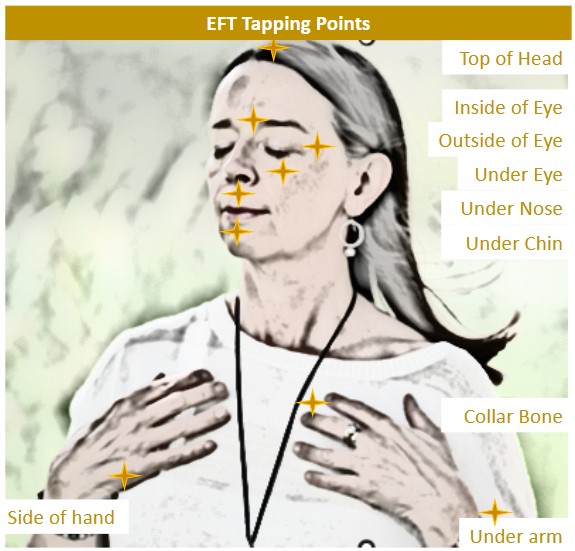
EFT stands for Emotional Freedom Techniques.
Commonly known as ‘Tapping’, EFT is a self-applied stress reduction tool, using your own fingers to tap on yourself. Drawing on elements from both talk therapy and acupressure, it is often referred to as psychological acupuncture.
Simple EFT
In its simplest form, EFT (Simple EFT) involves tapping first on the side of your hand, and then on 8 different points on your upper body, while repeating a statement or phrase that relates to a negative feeling or emotion that is bothering you. This Simple EFT is easy to learn and can be immediately effective.
Working with a practitioner.
Building on Simple EFT, EFT Practitioners curate a collection of tapping based techniques that guide you to tune into your problems without being emotionally overwhelmed by them. EFT prioritizes gentleness and safety, calming your nervous system and nurturing emotional stability.
From this calmer space you are able to access insight and compassion, giving you understanding to change your relationship to your problem. Your brain forms new, healthier associations with past stressors and paves the way for more balanced responses to future stress.
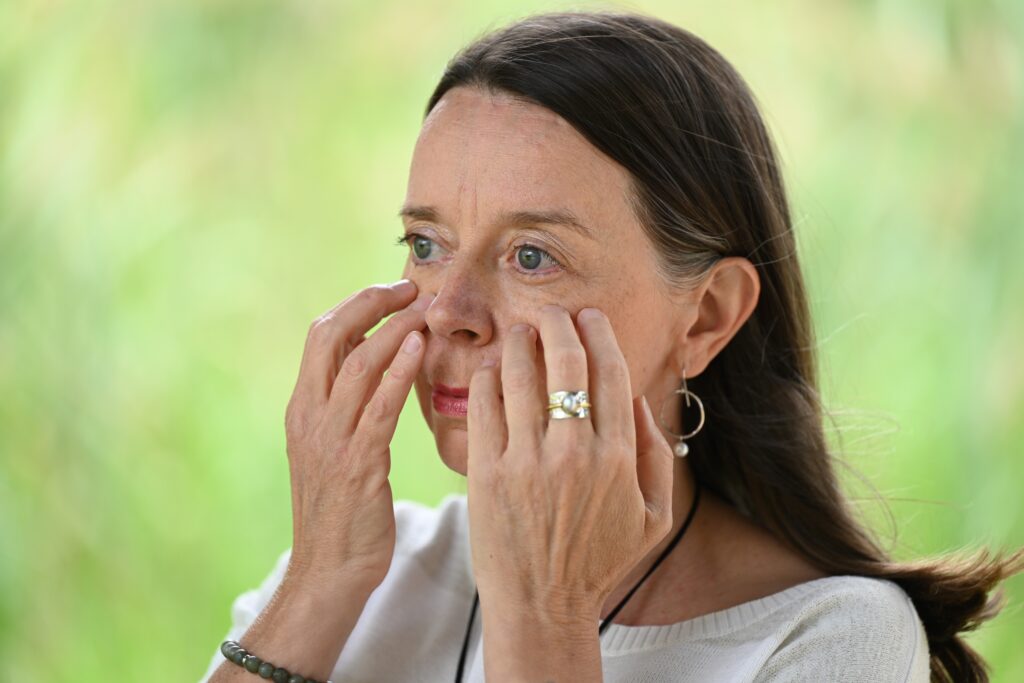

Every person’s path is different.
A practitioner creates a safe space and guide you towards healing, but the direction and pace of healing very much comes from within you.
Calming and resetting our brains.
Clinical studies show that EFT significantly lowers our stress hormone cortisol which helps improve mood, reduces anxiety and strengthens our immune system.
Tapping signals are transmitted via our primo cardiovascular system to our brain. By sending calming signals to the amygdala (the stress processing center in the brain) and the hippocampus (the memory center of the brain), EFT works to reset and rewire our brain, releasing limitations and emotional charge from negative memories, experiences, emotions, and thoughts.
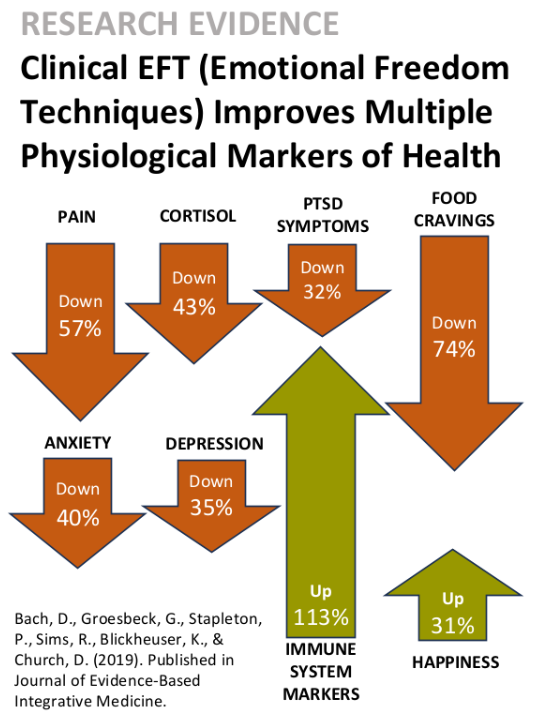
Results are measurable.
Evidenced based research has shown that clinical EFT simultaneously enhances well-being and improves a wide range of health markers across multiple physiological systems, including the endocrine, immune, and cardiovascular systems.
What the experts say:
EFT International (EFTi) sets the highest standards in training, certification, and research-based understanding of clinical EFT for personal and professional use. EFTi’s latest Research Summary provides an overview of the clinical and academic research supporting EFT’s efficacy across conditions including cravings and weight issues, anxiety and depression, PTSD, phobias, pain relief, performance, stress and more: EFT International Research Summary.
World clinical EFT research leader, Dr Peta Stapleton, registered Clinical & Health Psychologist shares her results of the many clinical trials which demonstrating EFT’s effectiveness on her personal research page and video on latest science of clinical EFT. In her TEDxRobina talk, Dr. Stapleton explores how EFT could revolutionize therapy by integrating psychological and physical approaches to treat conditions like anxiety, stress, and chronic pain.
The first step is to book a free 20-minute consultation
Let’s connect and discuss how EFT can support your journey to ease and wellness.
EFT FAQ
Where did EFT come from?
EFT was developed in 1995 by USA based engineer Gary Craig, inspired largely from the work of Dr. Roger. Callahan, a psychologist who pioneered a technique called Thought Field Therapy (TFT). Dr. Callahan discovered that tapping on specific acupressure points could help alleviate emotional distress, such as phobias and anxieties. Gary Craig, who trained with Dr. Callahan, simplified and expanded upon these methods, creating EFT.
How is EFT different from traditional talk therapy?
EFT is considered a healing modality rather than a traditional therapy. While it shares similarities with therapy, such as addressing emotional and psychological issues, it combines tapping on acupressure points with focusing on thoughts and feelings to release energy blockages and promote healing.
What happens in an EFT session?
Meeting online via zoom or another platform that allows us to see each other’s faces, we explore your challenges, emotions and physical sensations in your body, while I guide you to tap on specific acupressure points on your upper body. This helps to calm the nervous system, release emotional blocks, and shift limiting beliefs. Each session is tailored to your needs, creating a safe space for healing and transformation.
How long does an EFT session last?
My online EFT sessions generally last around 80 minutes, however I suggest you keep at least 90 minutes free for the session. My role as a practitioner is to ensure you are feeling as safe and supported as possible at the end of your session so it is great to know you don’t have to rush off at the end of 80 minutes. Shorter sessions are possible, as are longer ones, which we can discuss as needed.
How many sessions will I need?
The number of EFT sessions needed varies for each person, depending on the issue’s complexity and how deeply rooted it is. Some people feel noticeable relief in just one session, while deeper or long-standing challenges may require multiple sessions for lasting change
Can I do EFT on myself, or do I need a practitioner?
You can absolutely use EFT on yourself for daily stress relief and emotional balance. My hope is that EFT will become a regular part of your daily self-care practice and will be there whenever you need it. Working with a practitioner provides deeper guidance, helps uncover hidden blocks, and offers support for more complex or deeply rooted issues.
What if I don’t know what’s causing my issue—can EFT still help?
Yes! You don’t need to know the root cause for EFT to be effective. We can start with your current feelings or physical sensations, and through tapping, deeper insights often emerge naturally, allowing for healing and resolution.
Are there any side effects of EFT?
EFT is generally safe with no harmful side effects. You may experience temporary emotional discomfort as you process intense feelings, which some people have described as riding a wave of emotion, which normally finds a natural calm through the tapping process.
Does EFT work better if it is in person or online
EFT can be just as effective online as in person. The tapping process works through both virtual and in-person connections, allowing you to experience the benefits wherever you feel most comfortable and relaxed. Many of my clients live overseas and as we know, working online has become more normal since the pandemic. Personally, I find that I am much more relaxed and ready to work on my issues which all I need to do is show up on my computer, rather than travel to see a practitioner.
Do I have to believe in EFT for it to work?
You don’t need to fully believe in EFT for it to work. I guess it is fair to say you need to have an openness to the possibility that it may work. I have had clients experience positive results even with skepticism which is partially because process focuses on calming your body’s stress response, which can help bring relief regardless of belief. Much to her dismay, my teenage daughter has even admitted that she can feel the benefits from a short session (she doesn’t have the patience to have a longer session!).
Can I get benefits from using an online EFT tapping script?
While tapping scripts can be useful for self-care, working with a practitioner provides a more profound, lasting transformation. EFT works best when targeting specific feelings and experiences, specifically your own feelings and experiences. A downside of a tapping script is that it does not speak to your own personal feelings and experiences. I suggest you use a tapping script as a general guide but feel into your own thoughts, emotions and body sensations to use as prompts while tapping through your EFT points.